
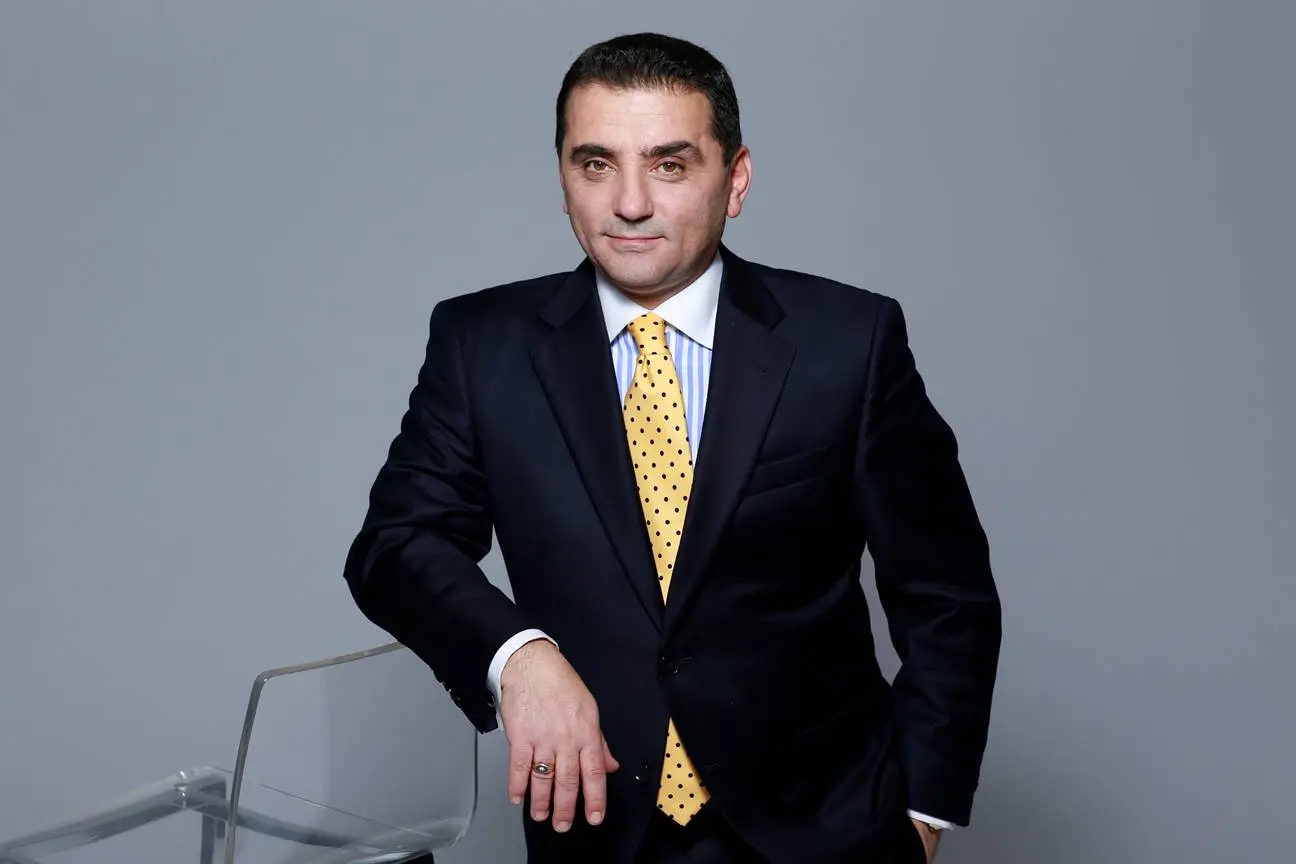
In 1989 Mr. Dervishi obtained his law degree from Tirana University School of Law. Mr. Dervishi worked as a special agent of the General Investigations Office with his office in Tirana. In 1994 he was elected as the Deputy Attorney General by the Albanian Parliament. He served as the Deputy Attorney General of Albania from 1994 to 1998.
Fatos Dervishi, Esq.
In 1998 he immigrated to United States. His family arrived in the U.S. within a few months. Upon his arrival in Washington D.C., he met with members of the U.S. Senate and House of Representatives since his trip was sponsored by the U.S. government. Beginning in 2003, he began to attend Pace University School of Law and graduated with a Master of Law degree in May, 2004. He is now admitted to the New York State Bar and practices law in all courts in our state.
In the year of 2008 Mr. Dervishi partnered with Mr. Jared T. Levine and Duane R. Morgan and established the Law Offices of DERVISHI, LEVINE & MORGAN, P.C. Mr. Dervishi is extremely active in the Albanian community assisting recent and long-time residents with their legal and other needs. He serves as a liaison for members of the Albanian community in America for all of their legal needs.
Member of the New York State Bar Association
Member of the New York State Trial Lawyers Association
Member of the American Bar Association
Member of International Bar Association
Member of Madison Who’s Who
Education: TIRANA UNIVERSITY SCHOOL OF LAW, 1989 Pace University School of Law, New York, 2004 Born in Burrel, Albania.
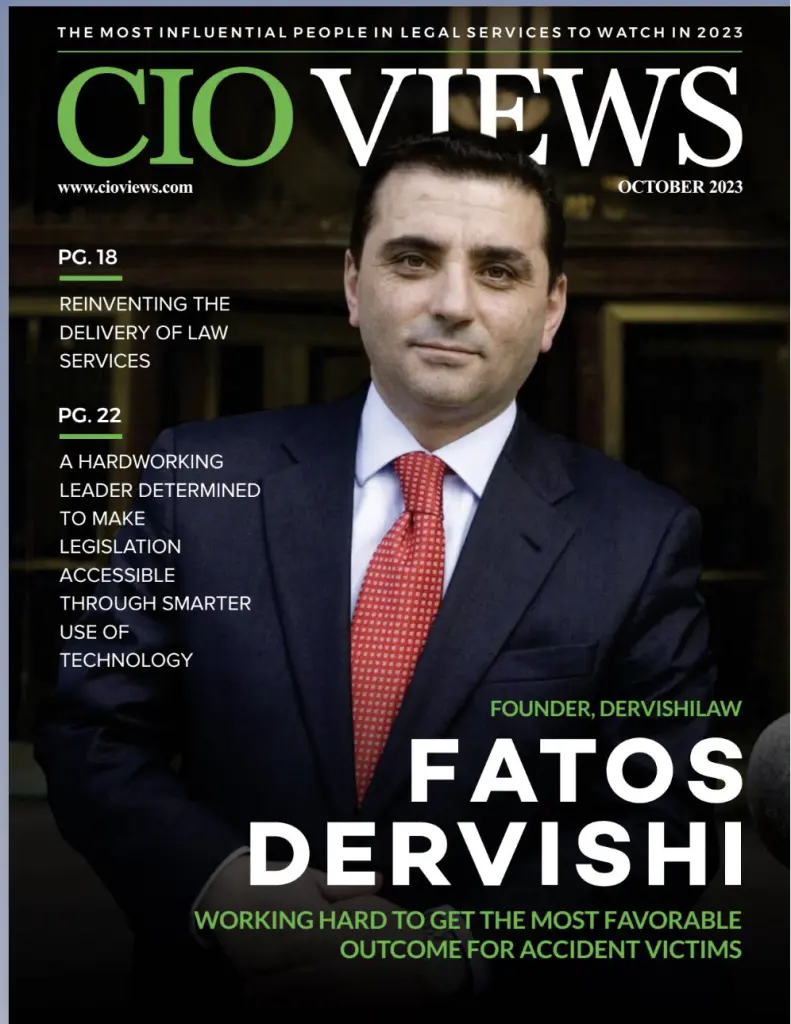
Fatos Dervishi represents people injured in construction accidents, motor vehicle collisions, falls, workplace incidents and other accidents caused by unsafe conditions or negligent conduct. His practice includes matters involving scaffold and ladder falls, falling objects, dangerous machinery, vehicle accidents, spinal injuries and other serious injuries.
Every case depends on its individual facts. An initial consultation allows the firm to determine whether the matter falls within its areas of practice.
Yes. Construction accident claims are an important part of Mr. Dervishi’s practice. He represents workers injured in incidents involving scaffolds, ladders, cranes, forklifts, machinery, falling objects, building collapses, electrocution and other dangerous worksite conditions.
The firm may investigate how the accident happened, which companies controlled the worksite and whether an owner, contractor, equipment provider or another party may bear legal responsibility.
Possibly. Workers’ compensation may provide medical care and cash benefits for a qualifying job-related injury without requiring the employee to prove fault. In some situations, an injured worker may also be able to pursue a separate claim against a negligent person or company other than the employer.
Because workers’ compensation and third-party claims involve different rules, benefits and procedures, the circumstances should be reviewed by an attorney as early as possible.
Responsibility depends on how the accident happened and who owned, managed, supervised or supplied equipment for the project. A legal investigation may examine the property owner, general contractor, subcontractors, equipment companies, manufacturers and other businesses involved in the work.
New York law contains specific provisions addressing scaffolds, ladders and safety protections used during construction, demolition and repair work.
Bring or provide any information currently available, including:
Do not delay contacting the firm merely because some of these materials are unavailable. Additional evidence may be identified during the investigation.
During the initial evaluation, the firm will ask how the accident occurred, where it happened, who was involved and what injuries resulted. The attorney may also discuss medical treatment, employment, insurance coverage and any documents that have already been received.
The purpose of the evaluation is to identify the legal and factual issues that require further review. A consultation does not guarantee that the firm will accept the case or that a particular outcome will be achieved.
The next steps depend on the type of claim, but they may include:
The firm should explain who will work on the case, how updates will be provided and what information will be needed from the client.
It is generally advisable to contact an attorney promptly. Evidence can be altered or lost, witnesses may become difficult to locate and different notice or filing requirements may apply depending on the type of accident and the parties involved.
In a workplace matter, the injured worker should also promptly report the accident to the employer and seek appropriate medical care. New York workers’ compensation law contains specific notice requirements, subject to certain exceptions.
Yes. A family member may contact the firm when an injured person is hospitalized, medically unable to communicate or needs assistance making the initial inquiry.
The attorney may eventually need to speak directly with the injured person or an individual who has legal authority to act on that person’s behalf.
Dervishi Law Group offers a free initial case evaluation. Before representation begins, the firm should explain the proposed fee arrangement, responsibility for case expenses and the terms of the written retainer agreement.
Attorney fees in many personal injury matters may depend on whether compensation is recovered, but the exact arrangement should always be reviewed with the firm before signing an agreement.
The attorney and staff assigned to a case may depend on its type, complexity and stage. Prospective clients should ask who will be primarily responsible for the matter, how Mr. Dervishi will participate and who they should contact when they need an update.
Clear communication about case responsibility should be established at the beginning of the attorney-client relationship.
No. Contacting the firm, submitting an online form or participating in an initial consultation does not automatically create an attorney-client relationship.
Representation begins only after the firm confirms that it can accept the matter and the client and firm complete the required written agreement. Avoid submitting highly confidential or time-sensitive information until representation has been confirmed.
Address 1:
2322 Arthur Ave., Suite 3A
Bronx, New York 10458
Address 2:
18 East 41st. Street, 6th Floor
New York, NY. 10017
Office: (718) 484-4757
Cell: (917) 496-8342
Fax: (718) 484-4758